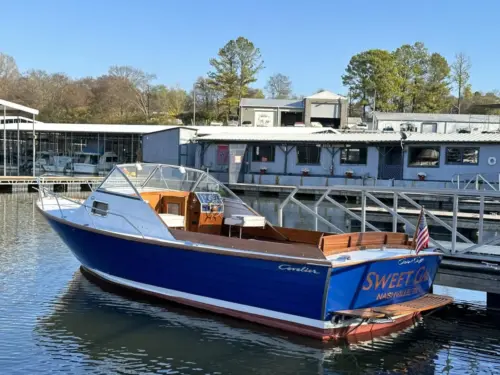
Description
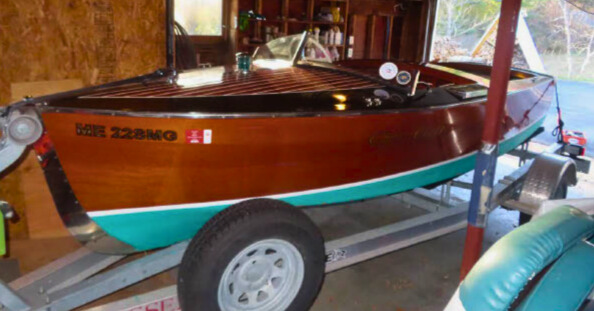
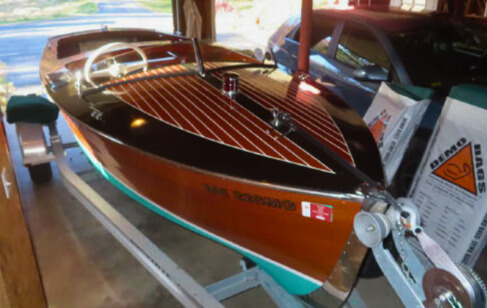
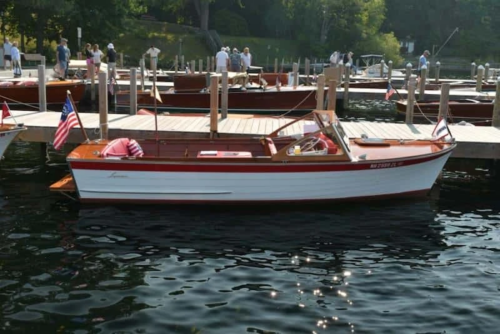
Located in Maine on a new trailer, she is easily transported to any location. Following is a brief transcript from the appraisal survey done on 11/2/2025.
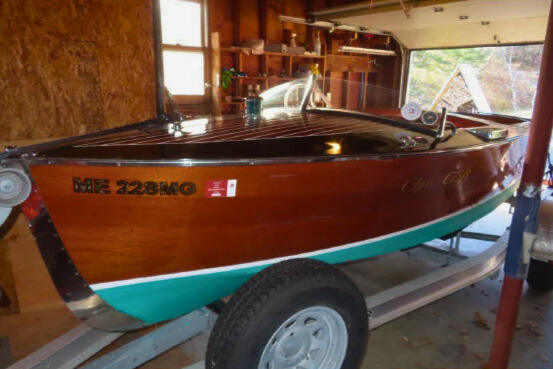
1940 Chris Craft Runabout Deluxe Hull #52391, HULL ID# MSZMT129H809
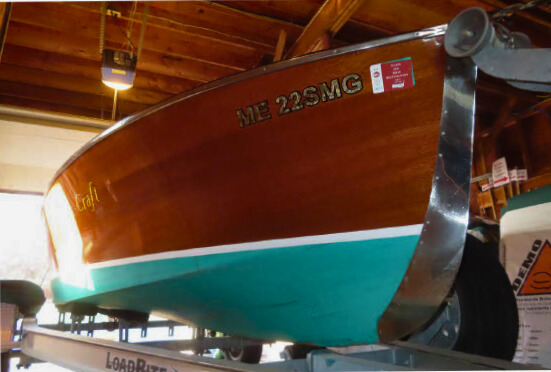
The vessel was inspected ashore only, with no sea trial conducted. There were no independent mechanical inspections performed in conjunction with my survey. The vessel was constructed in Holland Michigan in 1940 and was assigned hull # 552391. This vessel was later assigned Massachusetts hull ID # MSZMT129H809, and ME state registration # ME 22SMG.
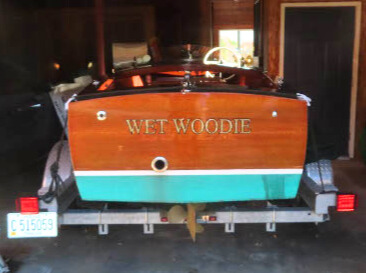
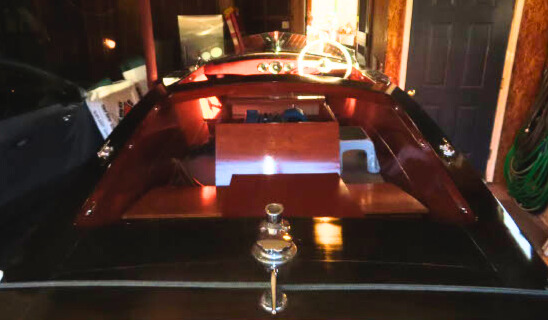
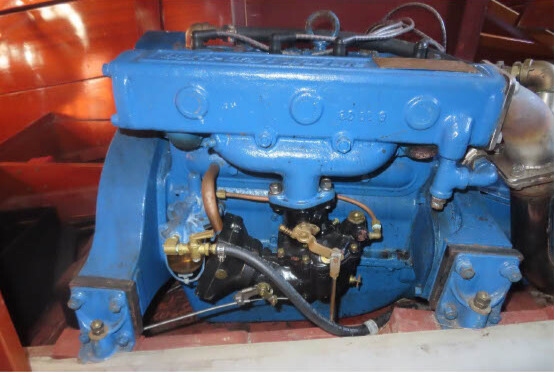
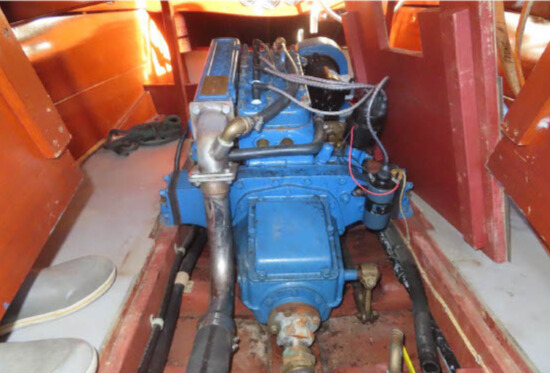
The propulsion is supplied by a single raw water-cooled Chris Craft Model B four stroke inboard gasoline engine coupled to a Paragon direct drive reverse gear, rated at 60 horsepower @ 3,200 RPM by the manufacturer. At the time of inspection, the name “WET WOODIE” was embossed on the stern.
The purpose of this survey was to determine the overall physical condition, estimate the current market value and marine risk evaluation. The survey of this vessel is based solely on a careful visual and non-destructive inspection of all accessible portions of its structure and available equipment. Complete inspection can be made only by removal of flats, soles, decking, headliners, ceiling or hull lining, tanks, and joiner work. Complete inspection of machinery, auxiliaries, piping, tanks, systems, electrical wiring, electrical and electronic equipment can be made only by continuous operation or by disassembly. This has not been done. No reference or information should be construed to indicate evaluation of the internal condition of the engines or the propulsion systems operating capacity. This survey was completed using, as reference, the federal regulations and amendments issued and enforced by the United States Coast Guard under the authority of Title 33 and Title 46 of the United States Code of Federal Regulations (CFR). In addition, the America Boat and Yacht Council (ABYC) and National Fire Protection Association (NFPA-302) voluntary standards were used as a reference during the survey. These ABYC and NFPA voluntary standard practices are generally followed by most vessel manufacturers today.
VESSEL NAME : WET WOODIE
MANUFACTURER : Chris-Craft Corporation
HULL NUMBER : 52391 (Later assigned Mass hull ID# MSZMT129H809)
VESSEL TYPE : Open runabout
HULL TYPE : Plaining hull with hard chine
MODEL : 15’ Runabout Deluxe
YEAR BUILT : 1940
LENGTH OVERALL : 15’ 6”
BEAM : 5’ 10”
DRAFT : 20”
DISPLACEMENT : 2,500 Lbs.
HULL COLOR Varnished Topsides
ENGINE : Model B Chris Craft
HULL CONSTRUCTION AND DETAILS
HULL MATERIAL : Double-planked carvel hull, estimated 5” width mahogany planks with ½” x 1 ½” longitudinal mahogany internal supports
FRAMING MATERIAL : Mahogany frames mechanically fastened to keelson, double framed
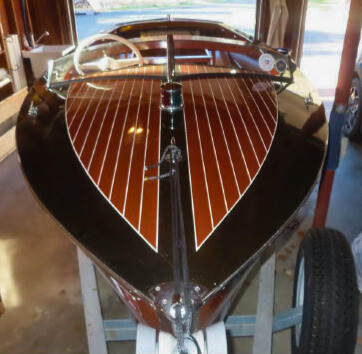
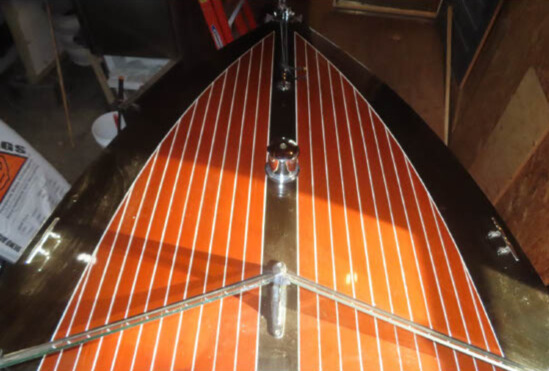
DECKING MATERIAL : Teak and mahogany strip planking, new foredeck, side decks & covering boards
KNEES : Painted mahogany, serviceable condition
HULL VENTILATION : Natural ventilation system
BILGE VENTILATION : Natural flow through & 12-v forced, untested
GENERAL CONDITION OF TOPSIDES : Uniform structural condition
GENERAL CONDITION OF DECKING : Firm underfoot, serviceable structural condition
GENERAL CONDITION OF BOTTOM : Uniform structural condition, see summary
GENERAL CONDITION OF BILGES : Relatively clean and dry
GENERAL CONDITION OF MACHINERY SPACES: Relatively clean and dry
CONDITION OF COCKPIT DRAINS : Non-self-bailing vessel with (1) 500 GPH bilge pump
CONDITION OF CLEATS : Firmly secured, no deficiencies noted
CONDITION OF DECK HARDWARE : Firmly secured, no deficiencies noted
CONDITION OF SEACOCKS : (2) Below waterline through hulls to (1) seacock
CONDITION OF INTERIOR : Well-maintained appearance
MACHINERY/PROPULSION ENGINE
LOCATION : Aft below cockpit sole
TYPE : Inboard raw water cooled gasoline
YEAR : 1940
MAKE : Chris-Craft
MODEL : Model B
HORSEPOWER : 60 Horsepower @ 3,200 RPM per manufacturers rating
SERIAL NUMBER : 837151
ENGINE HOURS : N/A
YEAR OF LAST OVERHAUL : N/A
CONDITION OF ENGINE BEDS : Uniform structural condition
FUEL LINES : A-I and Bronze, serviceable condition
FUEL FILTERS : External spin on canister & engine mounted primary
FUEL SHUT OFF VALVES : Equipped at tank top & engine, operable
CORROSION PROTECTION : Magnesium anodes
ENGINE ROOM VENTILATION : 12-v blower equipped, untested
ENGINE ALARMS : Equipped, untested
ENGINE CONTROLS : Independent cable and gear driven throttle and shift
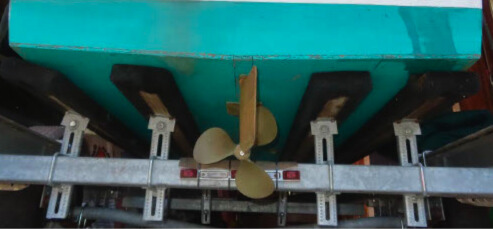
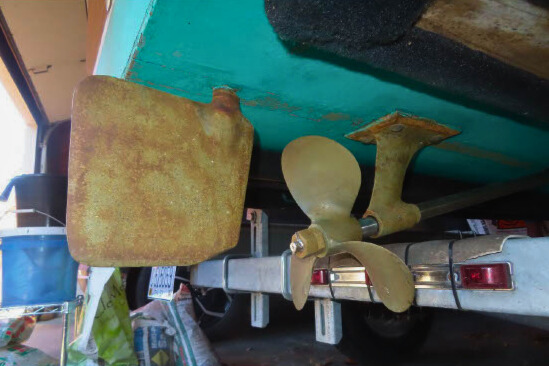
PROPELLER(S) : 3- Bladed Bronze 11 RH 11.5
REVERSE GEAR : Paragon direct drive equipped
STEERING SYSTEM
TYPE OF STEERING : Single gear driven assembly
EASE OF OPERATION : Operable to port and starboard, no resistance noted
LEAD OF STEERING LINKAGE : Accessible leads of linkage in uniform visual condition
ELECTRICAL SYSTEMS AND EQUIPMENT
VESSEL WIRING TYPE : 12-v DC
CONDITION : Updated wiring, well led and secure to ABYC standards and recommended practices
PANEL TYPE : Helm mounted switches with dedicated fuse box
LOCATION : Helm spaces
NUMBER AND TYPE OF BATTERIES : (1) 12-v Group 24 SVR Lead Acid
LOCATION : Centerline forward of engine in bilge sump
BATTERY INSTALLATION : Secured in dedicated battery box
TANKAGE
FUEL TANKS NUMBER & TYPE : (1) Gasoline
SHAPE & MATERIAL : Cylindrical aluminum
CAPACITY : 31-Gallons
CONDITION : Serviceable as observed, holding fuel
SECURRING FASHION : Mechanically fastened
LINES AND VENTS : USCG approved A-I
OVERFLOW : Overboard to starboard
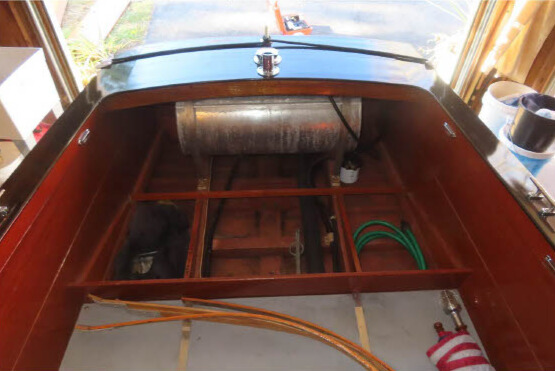
LOCATION : Centerline aft against transom
BONDING : Equipped
NOTE: Comments can only be made on portions of tanks that were visible to the surveyors at the time of inspection. Since there was no evidence to suggest that a present or prior leaking condition existed, further testing was not deemed necessary at this time. Continued monitoring of all tanks is recommended to help prevent accidental discharge into the environment.
HULL AND DECK STRUCTURES
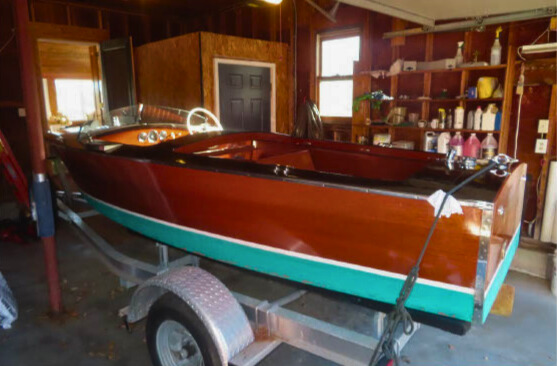
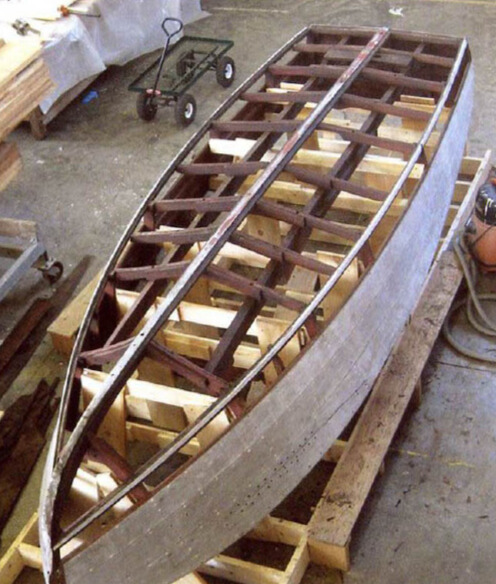
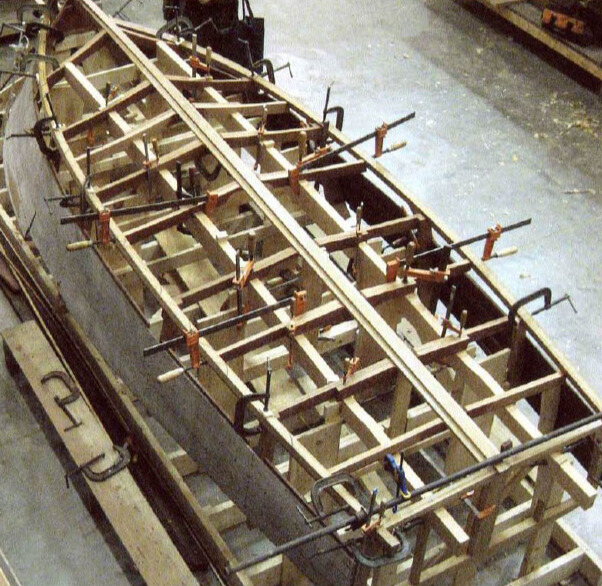
The hull construction above the waterline consists of estimated 5” mahogany planking over 1” x 3” Mahogany frames, mechanically fastened to the keelson. A series of ½” x 1 ½” longitudinal mahogany stringers are securely fastened the length of the vessel which provides further support for the hull shape. The vessel reportedly underwent a complete refit during prior ownership, and received a new foredeck, side deck, covering boards, bottom planking, topsides planking, transom, and longitudinal members. The accessible portions of the original knees and frames were in uniform condition, unspoiled by rot or signs of age-related degradation.
The hull to deck connection was found to be uniform across the circumference of the vessel, free of indications of impacts or separation. A stainless-steel half round is equipped along the exterior hull to deck connection which was noted to be in serviceable condition. There were no indications that the vessel had been subject to prior impacts along the rub rail. A visual inspection of the topsides was performed, including random percussion sounding with a rubber mallet. The topsides had a uniform visual condition, free of physical distortion or areas of scuffed varnish. All sections of topsides planks were found to be well seated and uniform. Furthermore, there were no indications of popped bungs, or areas of discoloration from water intrusion or degradation. (1) Stainless-steel above waterline through hull, (1) stainless steel exhaust port and (1) stainless steel fuel tank vent are located on the transom. All above waterline through hulls appeared to have been replaced during the recent refit, including the accessible portions of their associate hoses. Furthermore, all above waterline through hull fittings were firmly secured to the topsides when lightly struck with a soft rubber mallet. The tank vents internal screen was found to be free of debris or corrosion. A chrome brow was found to be fitted at the cutwater of the vessel. All planks fed into the stem and chrome brow were free of degradation or signs of wear. Light poking of the above and below waterline planks fed into the stem were structurally uniform. All internal planking for the topsides and bottom appeared in like-new condition, free of damage or rot.
The transom was accessed from the lazarette spaces and from outside of the vessel. Percussion sounding of the doubled transom planking from outside of the vessel revealed a firm, crisp audible tone, indicating a strong composition. There were no signs of loose planks or gaps between the planking. While appearing cosmetic in nature, a small crack was noted in the white boot stripe to starboard on the transom.
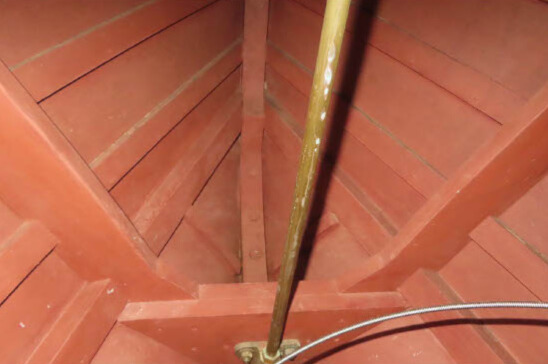
An inspection of the accessible portion of the hull’s interior was performed, accompanied by percussion sounding and light prodding with a flatheaded screwdriver. All accessible frames were found to be damage free and well secured to the internal 45° bottom planks. The fasteners securing the double frames were free of structural wear or indications of wastage. Furthermore, the accessible portions of the fasteners securing the frames to the keelson were visually free of oxidized wear.
BOTTOM
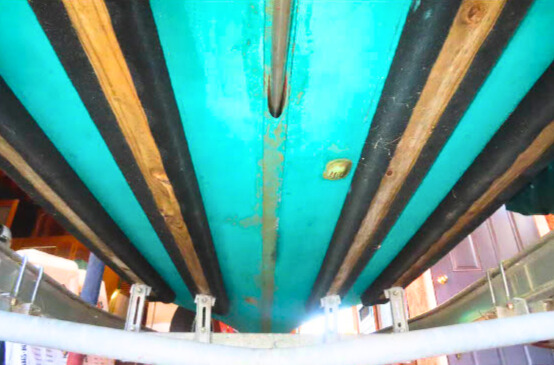
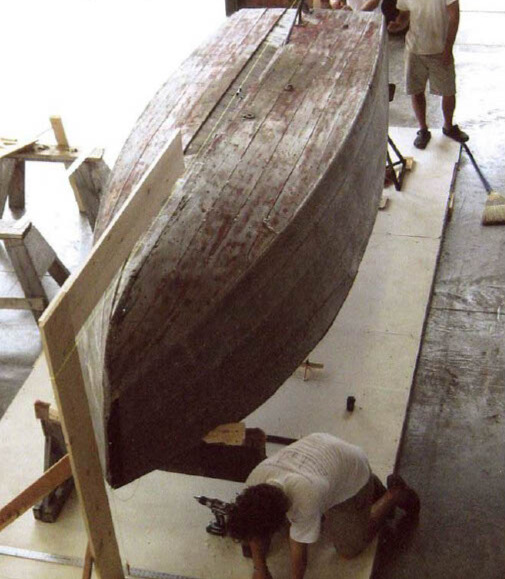
A visual inspection of the bottom, including percussion sounding was performed where not obstructed by the equipped trailer. The underwater body and hull shape were examined and found to be free of distortion, split planks, hogging, or other signs of deficiencies. The accessible portions of the external longitudinal planks appeared well secured at the transom and along the port and starboard chine of the vessel. The bottom paint was noted to be flaking in areas and would benefit from a fresh coat. Percussion sounding of the bottom planking revealed uniform audible tones, free of obvious soft spots or signs of separation from the internal planks. There were no indications of a prior grounding or stranding incident on the bottom. Furthermore, there were no signs of discoloration or wet spots between the seams or at the butt ends of planks. (2) Silicon bronze below waterline through hulls are equipped on the vessel and are associated with a garboard drain and the engine intake. The two through hulls were noted to be well secured to the bottom when lightly percussion sounded. Furthermore, all through hulls appeared free of damage from galvanic corrosion or impacts. Soft striking around the through hull with a soft rubber mallet did not reveal any structural deficiencies. All sections of below waterline hoses appeared recently replaced.
STEERING SYSTEM
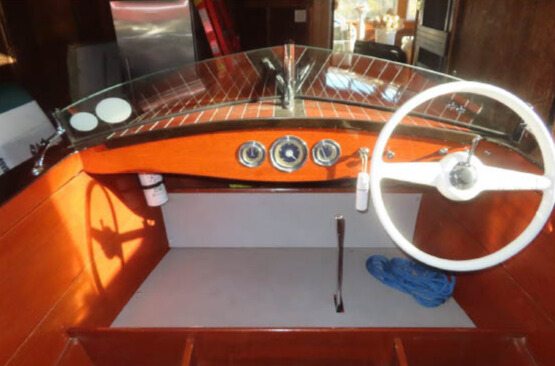
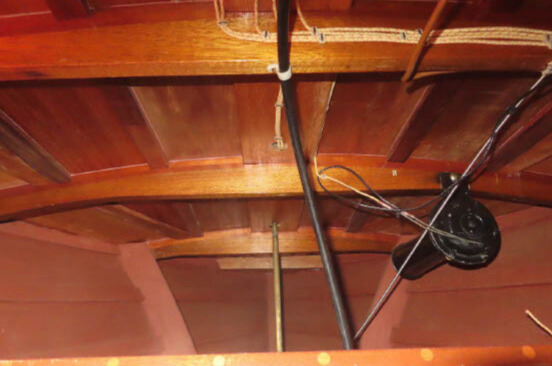
The steering system was inspected visually and operated without difficulty. The system consists of a single helm to a gear driven assembly, noted to be firmly secured at the helm and along the vessels interior. The helm was operated chock to chock and was noted to be operable, with no excess resistance or in either direction. Furthermore, there was no signs of excess play from side to side. The steering wheel was noted to be well secured, free of excess movement. The accessible portions of the mechanical gear steering were uniform, as seen in the aft lazarette spaces and beneath the helm. There were no signs of damage from wear or chafing sighted in the accessible portions of the steering linkage. Vision was noted to be unobstructed all around while at rest.
ELECTRICAL SYSTEM
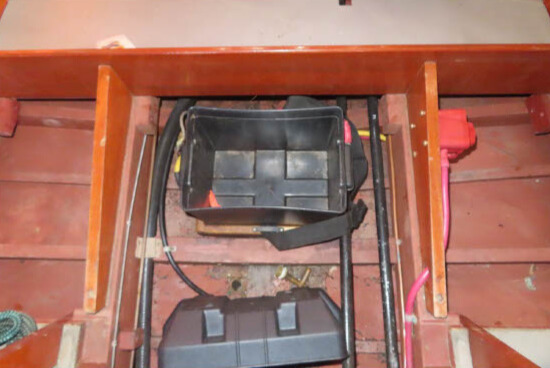
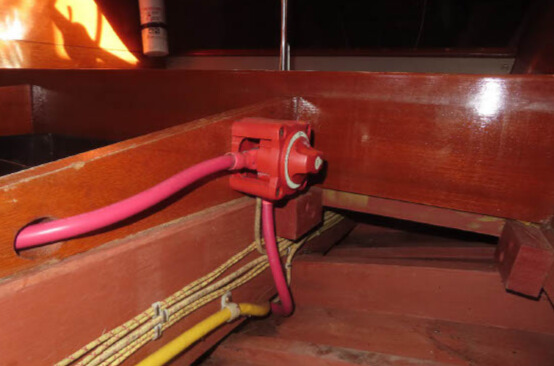
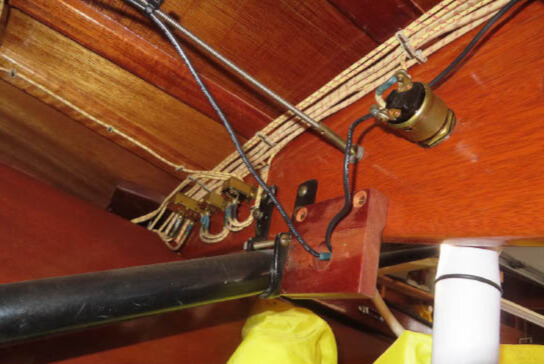
The electrical system aboard was found to consist of a 12-volt DC ships system powered by (1) 12-v group 24 lead acid battery. The battery is located centerline forward of the engine in the bilge spaces. At the time of inspection, the battery was removed for storage. The battery appears secured from shifting underway in a dedicated, electrolyte containing, non-conductive box. The accessible portions of the vessels 12-v wiring were inspected in the machinery spaces, lazarette, and beneath the helm. All vessel wiring was found to be replaced new and professionally installed. All wiring was well led and secured throughout the vessel. A series of 12-v DC switches are located at the helm. All circuits are protected against overload at a fuse box panel located within 12” of the switches. All wiring appeared free of damage from heat, corrosion, or rodents. The battery is controlled by a single selector switch, which is located to starboard in the bilge spaces. The battery switch was found to be installed within 72” of the batteries.
PLUMBING SYSTEMS AND TANKS
A single estimated 31-gallon aluminum gasoline tank is chopped and strapped in place against the transom in the lazarette spaces. Access to the fuel tank is largely granted behind the aft cockpit seating. The tank appeared to be replaced during the refit, and was free of bulging, oxidation, cracks, or other signs of distortion or wear. There were no gasoline fuel odors, stains, sheens, pools of fuel, or other signs of deficiencies present with the fuel tank. All accessible fuel
delivery lines were found to be USCG approved A-1 flexible line and were found to be in uniform visual condition. All stretches of fuel hose were noted to be clean and dry, with no apparent fuel leaks. Furthermore, all sections of fuel delivery hose were well secured from chafing and were equipped with rubber and stainless-steel hangers. Fuel filtration is provided by an external spin on filter, located to port of the fuel tank. An additional engine mounted filter is equipped on the vessel. Both filters were noted to be free of leaks or signs of deficiencies.
MACHINERY
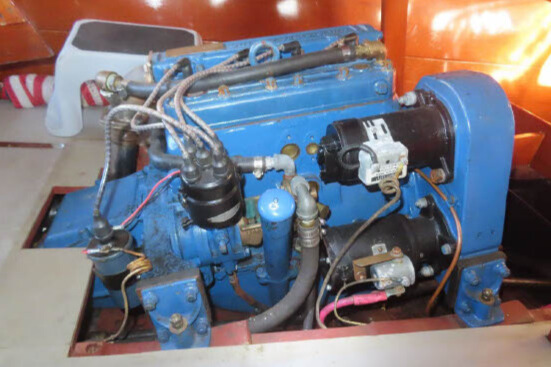
Propulsion is supplied by a rebuilt Chris-Craft Model B inboard gasoline engine, coupled to a Paragon direct drive reverse gear. According to the manufacturer, the engine produces 60 HP at 3,200 RPM. No engine hour meter was present at the time of inspection. The engine had a very well-maintained appearance for the age of the vessel, free of failed paint coatings or indications of corrosion. All visually accessible gaskets and mating surfaces were inspected where visible and were noted to be in serviceable condition. There were no indications of oil or fuel leaks at the fuel delivery line connection to the carburetor or around the oil pan connection to the block. All sections of exhaust hoses were in uniform visual condition, equipped with double hose clamps on all mating surfaces. There were no signs of prior raw water leaks sighted on the engine. All accessible engine hoses were supple when lightly compressed and free of “crunching” or indications of internal wear. The alternator and starter were noted to be free of oxidized staining or signs of damage from raw water exposure. Furthermore, the engine belt was free of chafing, chips, or wear patterns, and no belt dust was observed on the forward face of the engine. It was noted that the starter solenoid’s ungrounded terminal was exposed. The equipped engine mounts were free of structural oxidation or indications of fatigue. The cable throttle linkage was found to be well secured to the rebuilt carburetor. While not tested running, the throttle cable was found to be smooth, with no signs of resistance when exercised. A single lever shifter is located centerline at the helm which is mechanically fastened to a push far connected to the Paragon reverse gear. No indications of wear were observed in the fasteners securing the shift lever or their connection to the reverse gear.
COMMENTS AND RECOMMENDATIONS
The following recommendations are maintenance items believed by this surveyor to be important in the general maintenance of the vessel.
- The starter solenoid was found to have an exposed ungrounded terminal connection which required a non-conductive boot. Per ABYC 11.5.3.8.1 “Energized parts of electrical equipment shall be guarded against accidental contact using enclosures or other protective means
The following recommendations are determined to be cosmetic in nature and non-detrimental to the safe use of the vessel. The following recommendations may be costly in repair should they be undertaken by qualified technician or boatyard.
- The bottom paint was noted to be flaking in areas and would benefit from a fresh coat
- While appearing cosmetic in nature, a small crack was noted in the white boot stripe to starboard on the transom.
As seen, this vessel would be considered suitable for its intended use of inland, bay, and near coastal operation providing all red, bolded, asterisk (*) recommendations are complied with, and all U.S. Coast Guard safety equipment is properly fitted.
Every care has been taken and my full professional capabilities utilized to inspect this vessel. This survey was made where visible, without making removals and/or borings of structural members and/or removal of fastenings and are not covered by this survey. This survey does not constitute an inventory. This survey report is based upon the observed condition of this vessel and is not a warranty either expressed or implied thereof.